AI that respects your terminology, brand voice and review process
Not a black box. TextSetu routes every AI translation through a reusable, org-wide AI engine that layers your glossary, translation memory, brand voice and per-language rules onto the model, then lands the results in the same review workflow your team already trusts.
Every translation TextSetu produces is assembled from your rules before the model sees it, and your rules always win. Here is exactly how that works.
Machine speed, without losing your standards
Raw model output ignores your glossary, your tone and your reviewers. The AI engine folds all three into every request, so drafts arrive already on-brand.
Terminology comes first
Your glossary outranks the model's own judgment.
Lands in your workflow
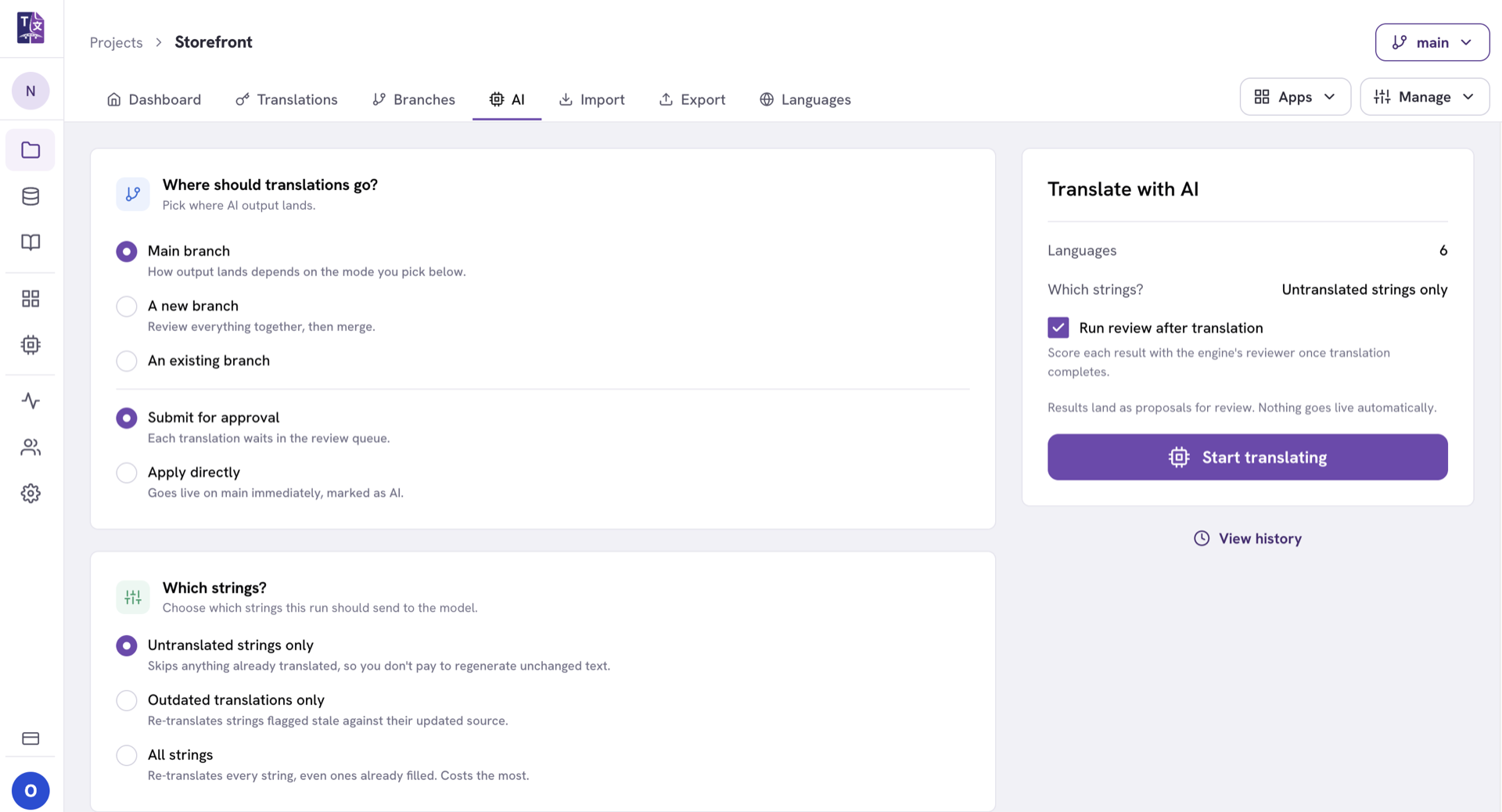
Drafts land in the review queue, or go straight out. Per run.
Pay your way
Your own provider account, or credits at a published rate.
Configure once, use across every project
One named engine your whole organisation routes through, composing every prompt from five layers in strict precedence.
The AI engine is a named, reusable configuration your whole org routes through. Five layers compose every prompt in strict precedence, so the model answers with your context, not a generic guess. Provider calls run one at a time down a ranked fallback chain, so you never pay for losing races.
- Claude, OpenAI, Gemini and DeepSeek ranked per language pair.
- Brand voice and per-language rules shape tone and formality.
- Glossary & TM inherited from the project, at highest precedence.
claude Answered+ usedopenai Not called~ standbygemini Not called~ standbydeepseek Not called~ standbyInjected because it appears in the source string.
Drafts you approve, not changes you discover
Review is a per-run choice, not a gate — and whatever the AI writes is labelled as AI.
With approval on, AI translations arrive as proposals in the review queue for a human to approve or reject, or an approver can apply them directly. With approval off they go live. AI-written values are marked as AI-generated, and protected main branches are always respected.
- Proposals in the review queue when approval is on.
- Target a branch instead of main whenever you prefer.
- An optional reviewer model scores each translation per dimension.
Only pay for strings that actually need translating
One key from a button, or a filtered bulk run. Nothing is billed that a filter could have skipped.
Translate a single key from a button, or open the bulk page, pick target languages and filters, and run. Candidates are filtered in the database before any model is called, and requests are batched to amortize cost. Platform-key runs are pre-flighted against your credits, so a run that can't be covered is refused up front, never mid-way.
- Filter by untranslated, outdated, tag or key prefix.
- Async runs work in the background with a live progress view.
- Reports break down translations, spend and review scores.
A second model checks the first
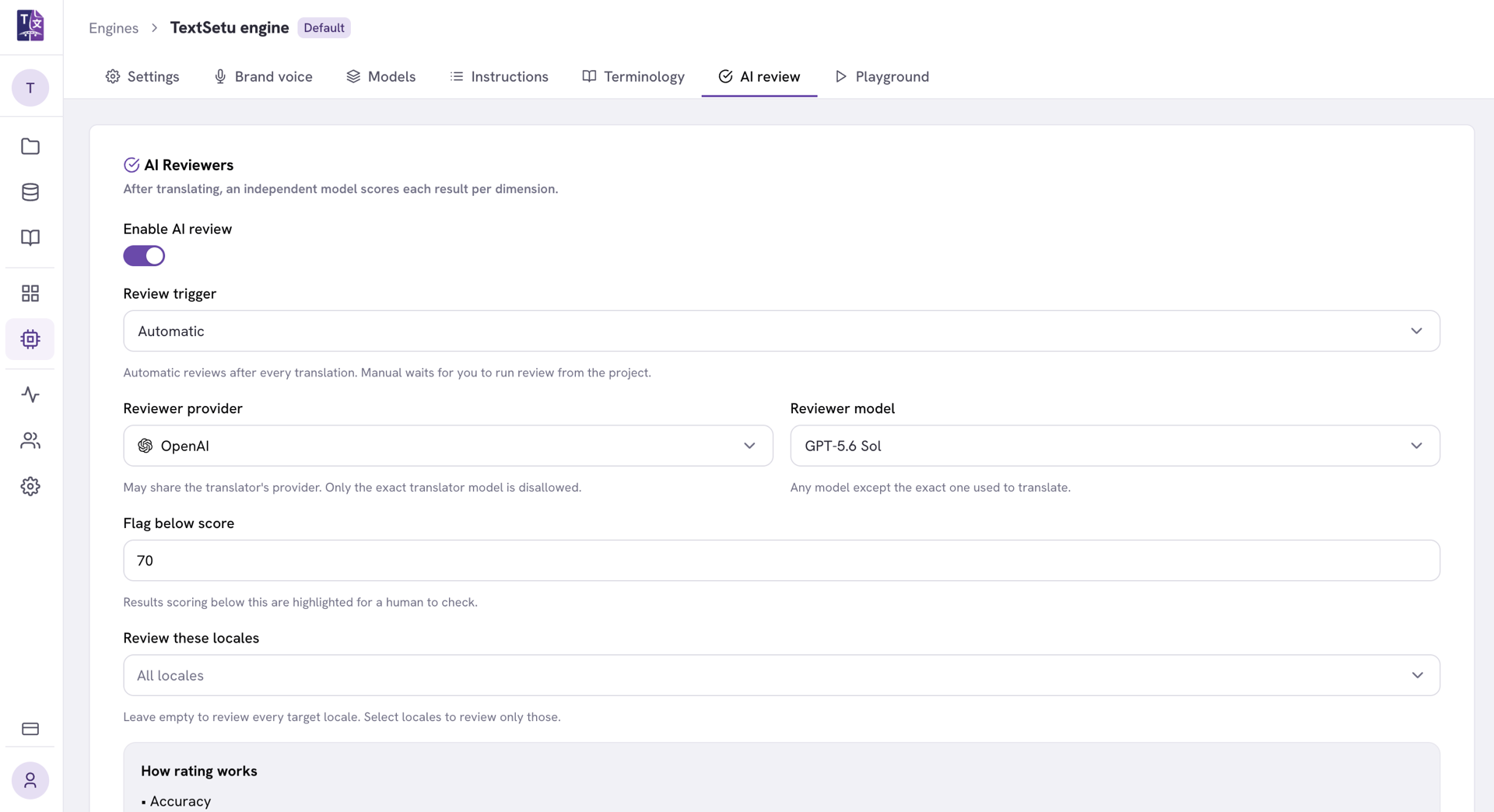
Turn on AI review and an independent model scores every translation before a person opens the queue.
AI review runs an independent reviewer model over each finished translation and scores it per dimension. It may share the translator's provider, but never the exact model that wrote the draft. Results below your threshold are flagged for a human to look at first, so review time goes to the drafts that need it rather than evenly across all of them.
- Any model except the one that translated — sharing a provider is fine, sharing the exact model is not.
- A flag threshold you set, so anything scoring below it is marked for a human to check.
- Automatic or manual, across every locale or only the ones you pick.
Explore related features
Put AI to work on your terms
Configure an engine, connect your key or top up credits, and translate at machine speed without losing your voice.