AI translates your product.You approve every word.
Ship in 100+ languages without hiring an agency. The AI you choose writes the drafts, and nothing goes live until someone on your team says yes.
- Claude
- OpenAI
- Gemini
- DeepSeek
The model answers last.
Your glossary, translation memory, brand voice and per-language rules are composed into every request before the AI sees a word of your text.
That is the difference between a draft you fix and a draft you accept. Nothing is corrected after the fact — the constraints go in with the prompt, in strict precedence, and your locked terms sit at the top, outranking the model's own judgment.
- Glossary — Locked product names and forbidden translations. Highest precedence: they outrank the model's own judgment.
- Translation memory — Wording your team already approved, reused rather than paid for twice.
- Brand voice — Tone and formality, set once and applied to every run.
- Per-language rules — The exceptions that apply to one locale only, such as no English loanwords in French.
Draft, review and ship every languagefrom the files you already have
AI drafts every language, using the model you choose — with your glossary, your past approvals and your brand voice attached before it answers.
Your words stay your words. Lock product names, ban the translations you never want, and set the tone once. Every run is held to it.
Translate the release you're building, not the one already live. Work on a branch, diff it against main, and merge when the copy is settled.
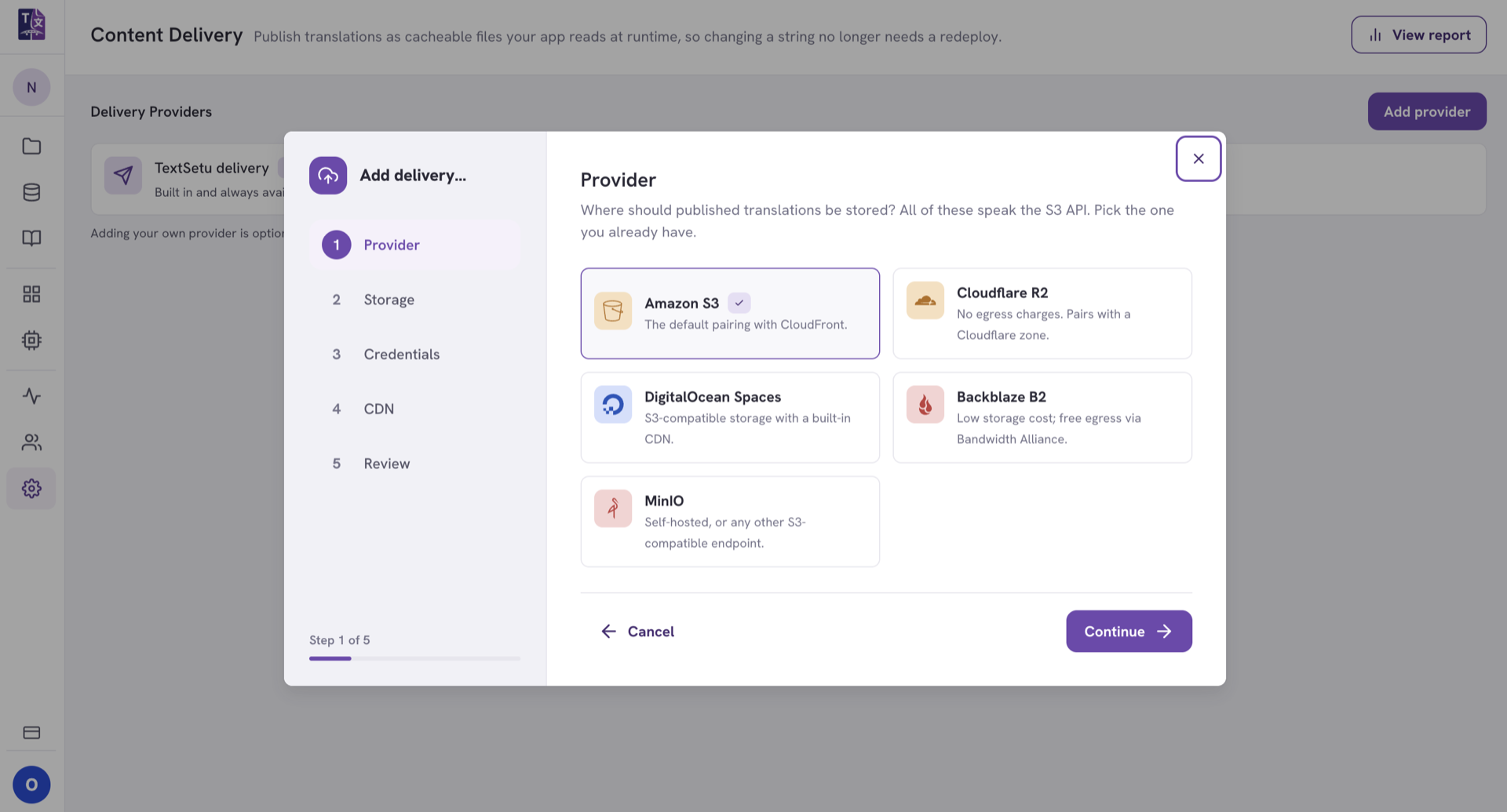
Publish without a rebuild. Approved copy goes to a versioned endpoint your apps read at run time, hosted by us or on your own storage.
Three ways in, three ways out,and one queue in the middle where a person says yes.
What ships becomes the next run's source: change the English, and only what changed goes round again.
Every published word can name the person who approved it.
TextSetu keeps the record as it goes: what wrote each line, who accepted it, and when. It isn't a report you have to generate. It is the workflow itself.
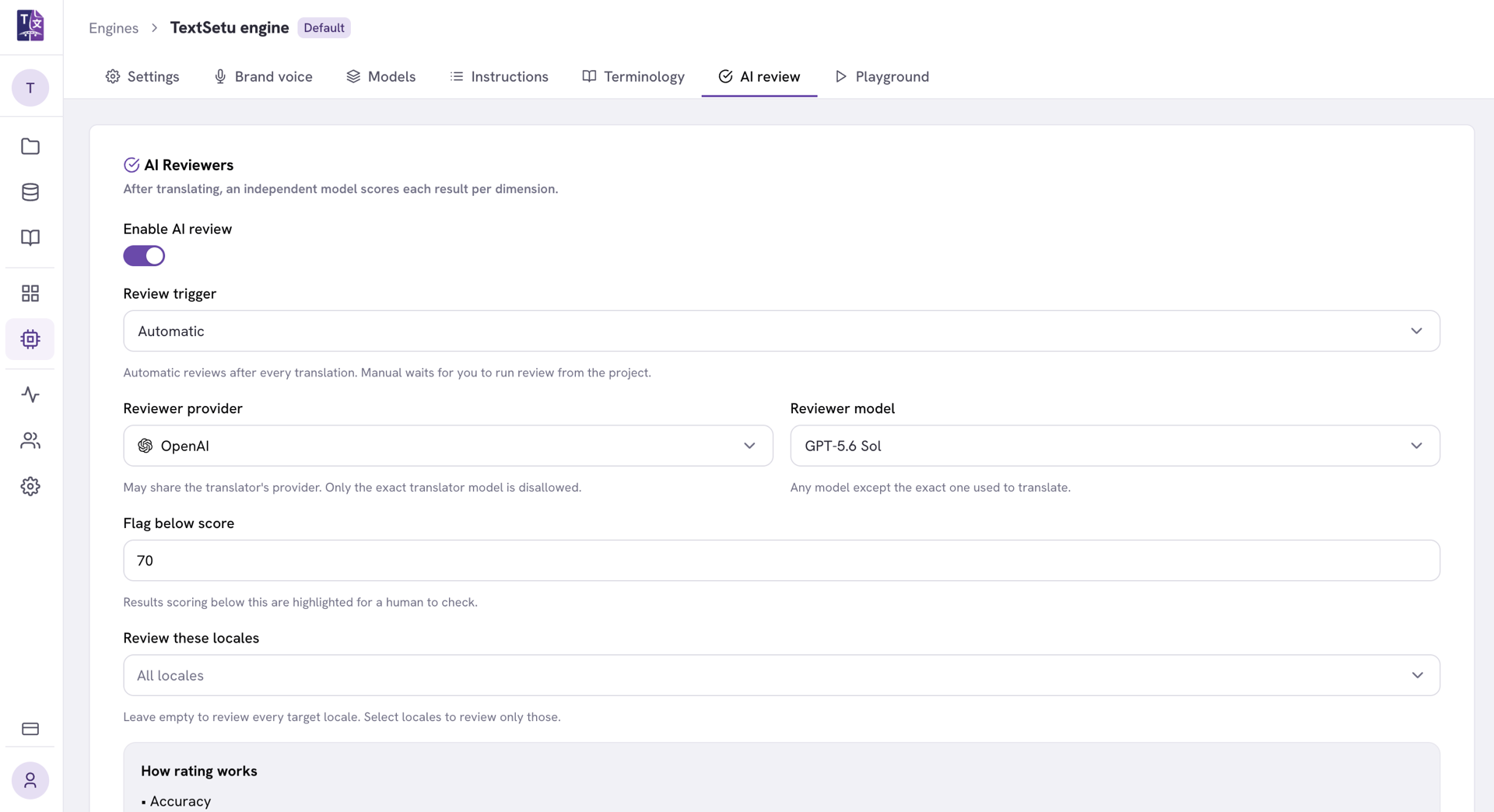
- AI review
An optional second model scores each draft before a human sees it, so reviewers spend their time on the few that need attention.
- Human approval
Nothing reaches your users until someone on your team accepts it. The score decides what they read first, never what ships.
- 1
Lars M. approved
checkout.placeOrder(DE)12 minutes ago
- 2
Camille D. edited
home.hero(FR)2 hours ago
- 3
System flagged 12 values outdated
today, 09:14
- 4
Priya K. imported 40 keys from JSON
yesterday
- What wrote it
- Every line is labelled as AI-written or human-written from the moment it exists.
- Who approved it
- A named reviewer accepted the draft. Nothing reaches your live product until someone has.
- When it happened
- Each decision carries a timestamp, so the record still answers the question six releases later.
Draft on a branch. Merge when it's right. Publish without a rebuild.
A wording fix should not have to wait for the next release. Work on a branch, merge when the copy is settled, and publish to an endpoint your app reads at run time — wired into the repository, the pipeline and the CDN you already run.
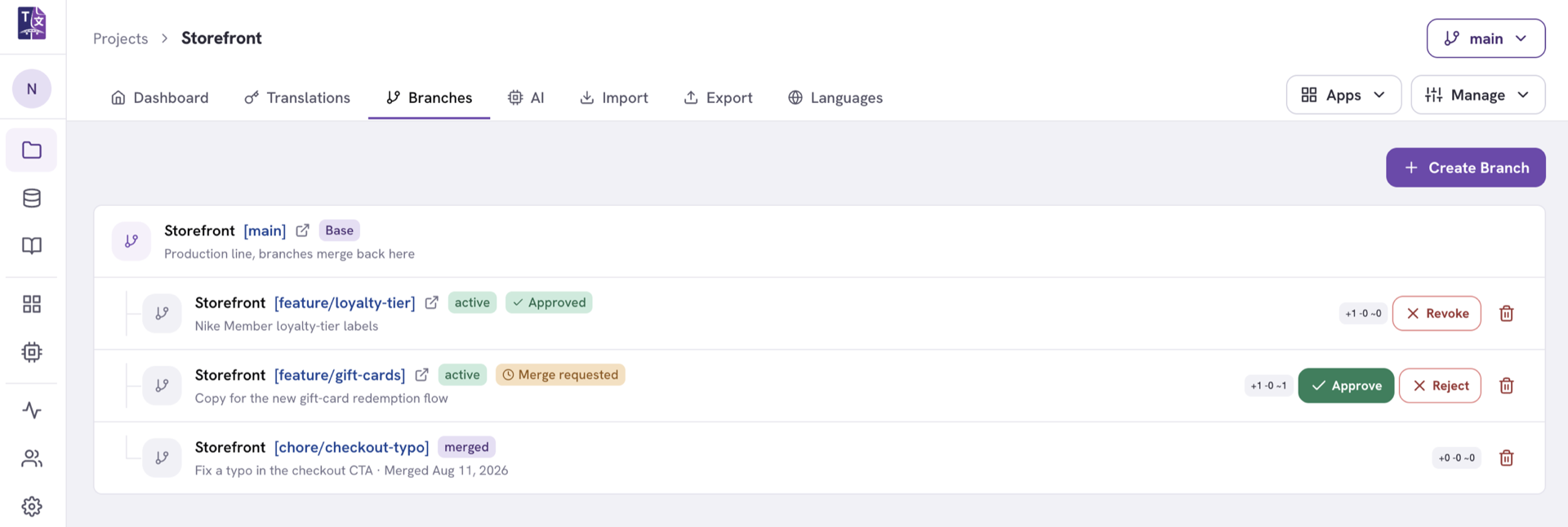
Work on a branch
Draft a feature or a campaign on its own branch. Nothing live moves while you write.
See the diff before you merge
Compare the branch against main: what is new, what changed, what has been overridden.
Publish without a build
Approved copy goes to a versioned endpoint your app pulls at runtime, so fixing a word does not mean shipping a release.
Built to be wired into what you already run
Developers: connect your repo, run translations against a branch, and pull approved copy into your build.
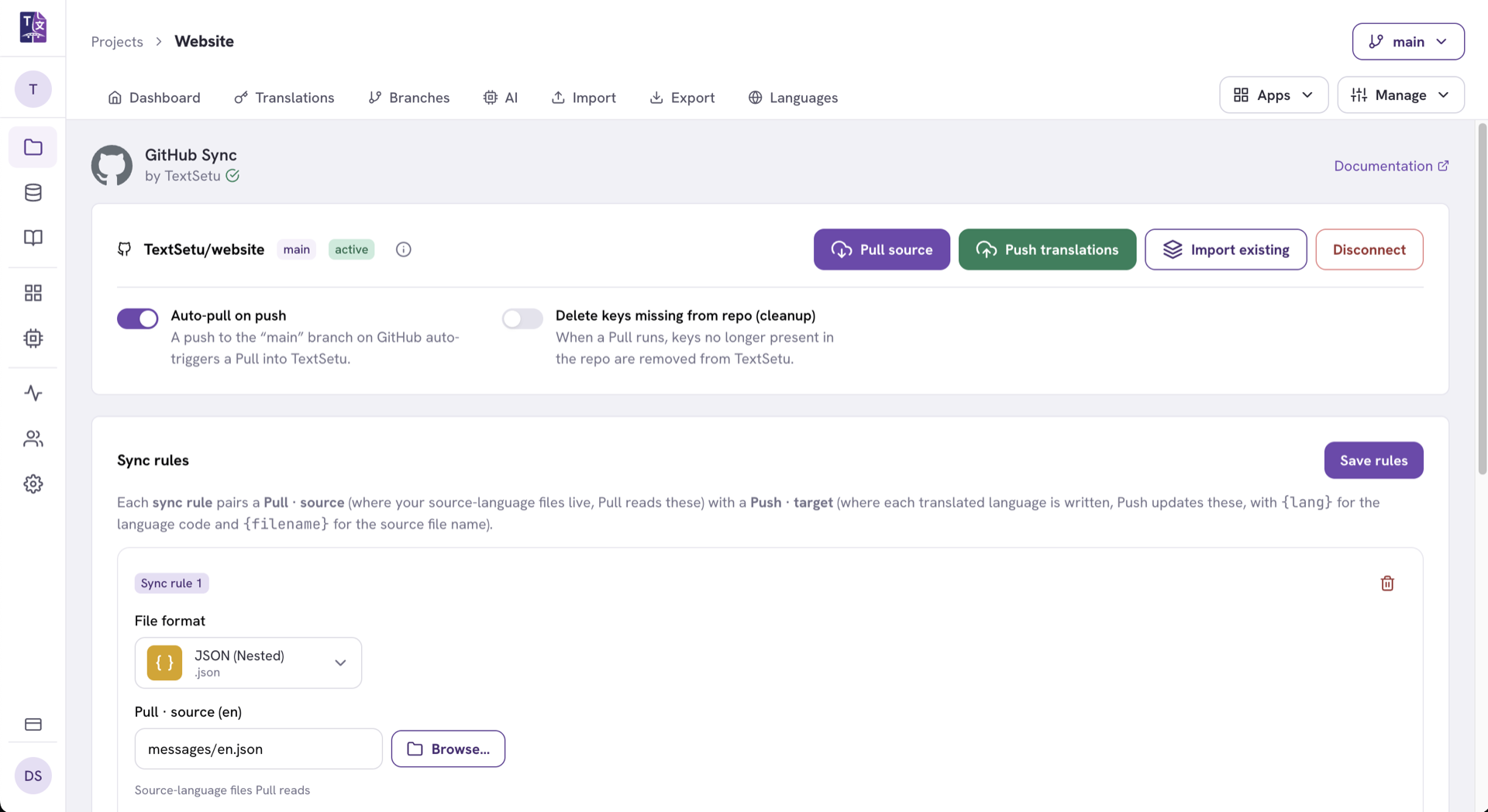
Live with your repository
Connect the repo once and source strings arrive on every push. Approved translations are written back to the branch you nominate.
Hosted by us, or on your storage
Delivery is built in and always available, or point it at your own S3, R2, Spaces, B2 or MinIO bucket behind your CDN.
Automate the rest
A REST API, a CLI and an SDK for your own pipeline, webhooks the moment a run completes, and an MCP server that connects Claude, Cursor or VS Code straight to your translations.
- Runtime delivery
- GitHub Sync
- GitHub Actions
- REST API
- CLI
- SDK
- Webhooks
- MCP server
Questions people ask before they start
What does it cost?
Plans start at $0 and run $39, $99 and $249 a month, metered on translation keys rather than words, so a long sentence costs the same as a short one, and adding a language adds nothing. Every paid plan includes AI credits, and if you connect your own Claude, OpenAI, Gemini or DeepSeek account the AI itself is free: you pay that provider directly, at their rate.
Where does our content go?
To the AI provider you choose, through your own account and under your own agreement with them. Our sub-processors and security posture are published.
Do we need an engineer?
To import a file and run a language, no. To connect your repo and automate it, about an hour of one engineer's time, once.
Which AI models can we use?
Claude, OpenAI, Gemini and DeepSeek, ranked per language, with automatic fallback. Switch whenever a better one ships.
Can we get our content back out?
Yes, in the same format you imported, plus TMX, a standard file any other translation tool can open. No export fees, no notice period.
How long does setup take?
Most teams import, run their first language and approve their first drafts in an afternoon.
Get your product into every language it should already be in.
Import your files, run one language, and see what comes back. If the drafts aren't good enough to approve, you've lost an afternoon and your files are exactly where you left them.
- No credit card required
- 100+ languages